Let's start with the honest part
Talking about pleasure with a partner is harder than having it. Most couples would rather navigate a conflict about money or family than sit down and say "I want to try something new with you." That gap between desire and conversation is exactly where lemon vibrators become useful, not as a workaround, but as a bridge.
Here's what I've learned from working with couples for two decades: the toy isn't the point. The permission it gives both of you to stop performing and start exploring is.
Why couples avoid the conversation in the first place
Three things usually block it. First, shame. You were probably raised with some version of the idea that good partners just "know" what you want, so asking feels like an admission of failure. Second, fear of rejection. Saying "I want to try this" is vulnerable. Your partner could laugh, could say no, could make it weird at dinner next week. Third, logistics. You're tired. The moment doesn't feel right. It's easier to just not bring it up.
What I tell people is this: the conversation you're avoiding isn't actually that conversation. It's a smaller one first.
The conversation that comes before the toy talk
You don't start by saying "I want to buy a lemon vibrator." You start by saying something like "I've been thinking about us, and I want to feel closer to you. I'm not sure how, but I'm curious." That's it. You're not proposing anything. You're expressing a direction.
The reason this works is because it's true, and it's not performative. A partner can hear that. They can respond to that. And once that opening exists, the next sentence becomes possible: "I've been reading about some ways couples can explore together, and I'm interested in trying something." You're still not specific. You're building the context.
This usually takes days, sometimes weeks. That's fine. There's no deadline for intimacy.
How to actually introduce the toy
When you do mention a specific toy, frame it around both of you, not yourself. "I've read that couples who use clitoral vibrators like lemon vibrators often report feeling less pressure and more pleasure" is different from "I want you to use this on me." One invites partnership. The other invites performance.
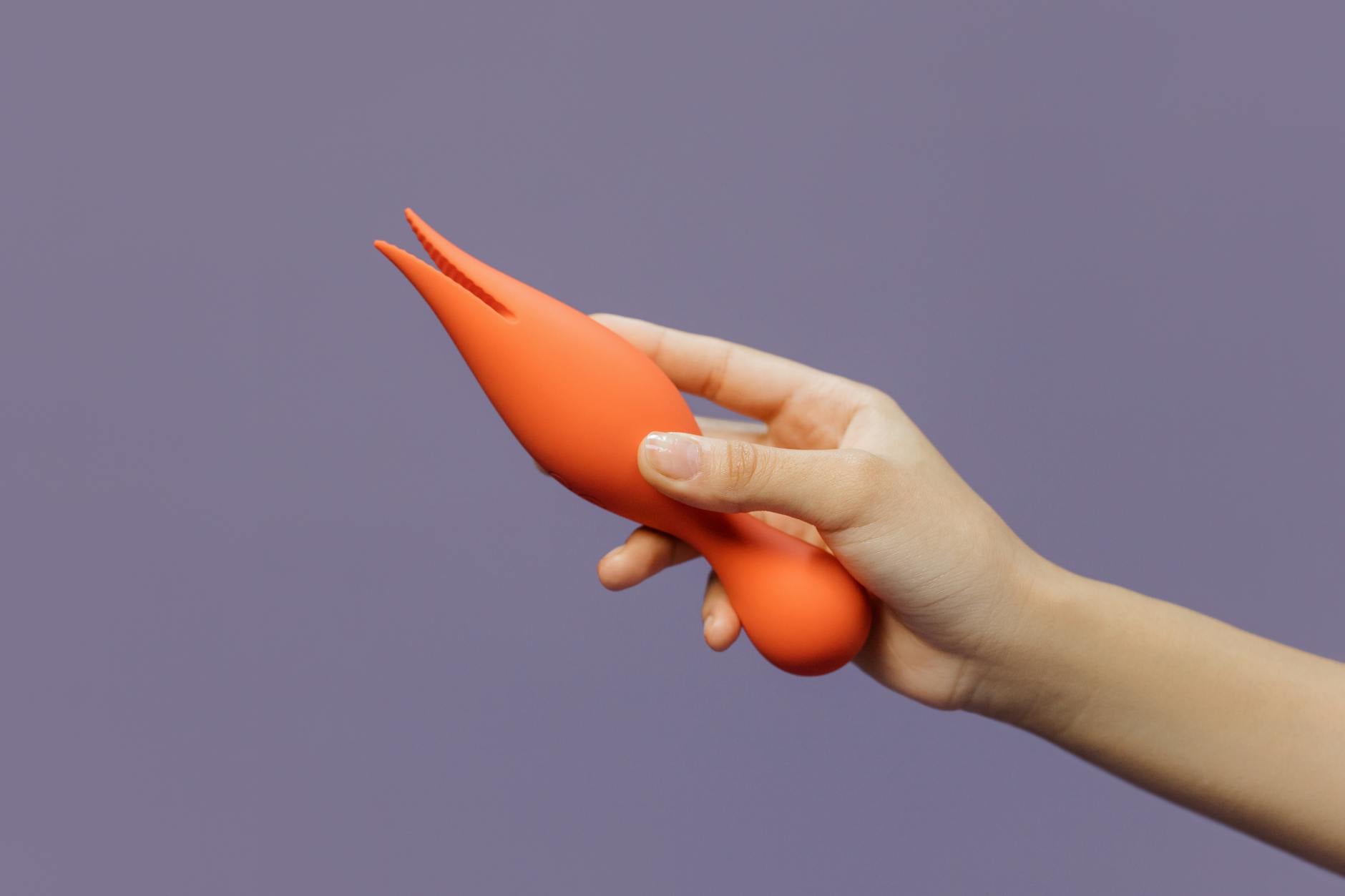
Show them the toy before any kind of sexual context. Have it visible in conversation the way you'd talk about a massage oil or a new bed. Let them ask questions. A lemon vibrator is small, elegant, and doesn't read as intimidating once you're just looking at it together. Let them touch it. Let it become a normal object in your relationship.
Then, and this matters, suggest trying it together in a low-stakes way. Not during sex. During foreplay, maybe, or just because you want to explore what it feels like. The goal is novelty and play, not performance or proving anything.
When your partner is hesitant
This is where most couples get stuck. One person says yes to the idea, and the other says "maybe later" or "I don't know" or, honestly, "I'm not sure I'm comfortable with that."
Here's what I'd tell you: his or her hesitation is information, not rejection. It might mean "I don't understand why we need this," or "I'm worried you're not satisfied with me," or "I don't know how to use it," or simply "I need more time." Those are different problems, and they need different responses.
If it's "I don't understand why," you can say: "I want us to feel more pleasure together. I'm not looking to replace anything. I'm looking to add to what we already have." That's honest, and it separates the toy from any sense of inadequacy.
If it's "I'm worried you're not satisfied," that's actually a gift. It means your partner cares about your pleasure. You get to say: "You matter to me. And so does this. They're not in competition." Reassure them about that.
If it's "I don't know how to use it," offer to show them. Put it in their hand. Walk them through the settings. Make it mechanical and neutral at first, then sensual when you're ready.
If it's "I need more time," that's the answer you accept. You say "Okay. We'll talk about it again in a month" and you let it go.
The actual moment: how to use lemon vibrators with a hesitant partner
Start outside the bedroom. Lie together, clothed, and let them hold the vibrator while you describe what you like. Some people find it easier to give pleasure first than to receive direction. By letting them be the one holding and controlling it, you're letting them access their own curiosity without pressure.
When you do move into a sexual context, communicate out loud. Not in a clinical way, but in a real one. "That feels good." "A little slower." "I like when you do that." Not only does this give your partner real-time feedback (which most partners actually crave), it also normalizes the conversation. You're proving that talking during sex doesn't kill the mood. It deepens it.
Keep the first few times brief. You're not trying to have a perfect orgasm. You're proving that this works for both of you. You're building a reference point where the toy becomes part of what you do together, not a separate thing.
If the conversation goes sideways
Sometimes you'll explain what you want, and your partner will get defensive or withdraw. They might say "So I'm not enough for you," or "That's weird," or simply go quiet. This is painful, and it's worth taking seriously.
Here's what usually helps: pause. Don't defend the toy. Instead, address what you hear underneath. "I hear that you're worried I'm not happy with you. That's not what this is about. Can we talk about that?"
If your partner needs time to adjust, give it to them. Some people have anxiety around sexuality that's rooted in their own history, not in anything you've done. That's real. That deserves patience.
But here's the hard truth I tell couples: if your partner refuses to have any conversation about pleasure, and they refuse to engage with you about what might feel good, that's a different problem than the toy. That's about whether you're building intimacy together or just existing in parallel.
Why lemon clitoral vibrators specifically help with communication
A lemon vibrator is discrete, intuitive, and designed for shared pleasure. It's not about penetration or performance. It's about sensation. Because of that, it tends to lower the stakes for both partners. You're not introducing something that feels clinical or extreme. You're introducing something that feels gentle and genuinely pleasurable.
I've had partners tell me they were initially resistant, but once they felt what the toy actually did for their partner, something shifted. They weren't resisting pleasure. They were resisting what they thought the toy meant. Once the reality replaced the fear, the resistance often melted.
After the conversation gets easier
Once you've done this once, the next conversation is easier. You've proven that you can talk about pleasure without it destroying anything. In fact, you've probably deepened the intimacy by being honest.
Many couples find that once they start using lemon vibrators together, they naturally start talking more about what they want, what they like, what they're curious about. The toy becomes a permission structure for a conversation that should have been happening anyway.
The real work here isn't learning to use a toy. It's learning to be vulnerable with your partner about something that matters to you. A lemon vibrator just makes that practice a little easier. And once you've done it once, you can do it again with other things.
Common questions about using vibrators with resistant partners
Should I introduce the toy during or outside of sex? Start outside of sex. Bring it up during conversation, let them see it, let them ask questions. This removes the performance pressure and helps them understand it's an idea, not a demand.
What if my partner says no and never changes their mind? Respect that. But also consider whether this is part of a larger pattern where you're not feeling heard about what matters to you. That might be worth a conversation with a therapist together, separate from the toy question.
How do I know if they're hesitant because they're genuinely uncomfortable or because they're scared? Ask. "Are you uncomfortable with the idea, or are you scared of something?" Those are different. Discomfort might not change. Fear usually does, with time and reassurance.
Is it okay to surprise my partner with a toy? Generally no. It removes consent from the conversation. Even if you mean well, it can feel like pressure. The conversation matters more than the surprise.
What if I'm the hesitant partner? Same approach, honestly. Talk about what you're afraid of. Is it feeling inadequate? Is it a boundary issue? Is it religious or cultural conditioning? Name it. Once it's named, you and your partner can actually address it together.
Should we use the toy every time we have sex? No. It's one tool in a larger toolkit. Some nights it's what you want. Some nights it's not. That flexibility is actually what makes couples more comfortable with it.
The bigger picture
Usingleman vibrators with a partner who initially resists isn't really about the toy. It's about building a relationship where both of you can ask for what you want without fear. Once you can do that around pleasure, you can usually do it around other things too. Money. Boundaries. Time. The hard conversations that actually matter.
If you're struggling to have these conversations even after trying, consider working with a therapist who specializes in relationships. Sometimes what feels like resistance to a toy is actually resistance to deeper intimacy, and that's worth exploring with professional support.
Curious about the first step?
Start with a conversation that has nothing to do with the toy. Tell your partner you want to feel closer. Listen to what they say back. From there, everything else becomes possible.